.jpg)
.jpg)



How the built environment can move beyond sustainability to create spaces that actively restore human and environmental health.

For decades, sustainability has rightly focused on reducing the environmental impact of the built environment. Architects, designers and manufacturers have worked to lower carbon emissions, improve energy efficiency, reduce waste and source materials more responsibly. These efforts have transformed the industry and remain essential as we work towards a low-carbon future. Leading organisations are recognising that simply reducing harm is no longer enough.
This reinforces that the conversation is moving beyond simply doing less harm.
The next chapter of sustainable design asks a more ambitious question: what if the materials and products we choose could contribute positively to the systems around them?
This is where regenerative materials come in. Rather than being defined by a single attribute such as recycled content, low embodied carbon or the absence of harmful chemicals, regenerative materials are considered through a more holistic lens. They are materials selected and designed to support the health of people and ecosystems across their lifecycle, taking into account where they come from, what they contain, how they are made, how long they remain useful, and what happens to them at the end of their life. At their most ambitious, regenerative approaches seek not merely to minimise negative impacts, but to create positive environmental and social outcomes.
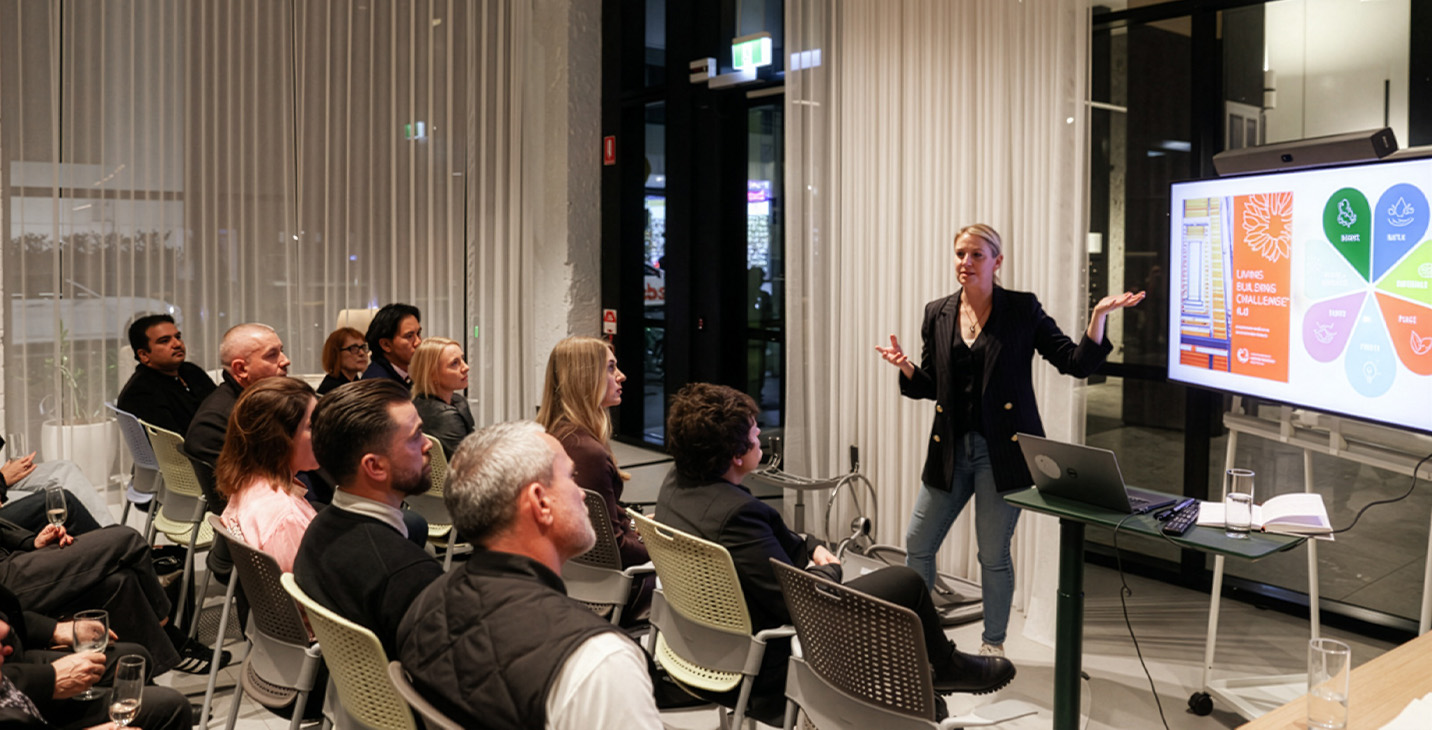
This shift, from sustainable to regenerative design, was the focus of A Field Guide to Regenerative Materials, a recent event hosted by Humanscale in partnership with Living Future Oceania. Bringing together architects, designers and sustainability professionals, the event explored how greater transparency, healthier materials and more informed specification decisions can help reshape the future of the built environment.
Featuring insights from Laura Hamilton-O'Hara, CEO of Living Future Oceania, introduced by Mark Nolan and Amanda Schembri from Humanscale, the discussion challenged attendees to think differently about the materials that surround us every day.
One of the strongest themes to emerge throughout the evening was that regenerative design begins with understanding the materials we surround ourselves with. Before we can eliminate harmful chemicals, improve circularity or reduce embodied carbon, we first need to know exactly what goes into the products we specify.
As Laura Hamilton-O'Hara explained: "This is why transparency is really important to us. It is so important to know what goes into things because from there you can make all kinds of other decisions."
It is a simple idea, but one with profound implications. Transparency doesn't simply provide information, it empowers architects, designers and manufacturers to make better decisions that improve both human health and environmental outcomes. The conversation served as a timely reminder that while innovation continues to accelerate across the design industry, progress also depends on learning from the mistakes of the past.
History Has Already Shown Us Why Materials Matter
One of the evening's most compelling moments came from an unexpected lesson in design history.
Laura Hamilton-O'Hara introduced the audience to Scheele's Green, a vibrant pigment developed in the late eighteenth century that quickly became one of the most fashionable colours of its time. The brilliant green appeared everywhere, from wallpaper and fabrics to paints, cosmetics and even children's toys. It was admired for its beauty, embraced by designers and celebrated by consumers. But beneath its striking appearance lay a deadly secret.
Scheele's Green was made using copper arsenite, an arsenic compound that slowly poisoned those who manufactured it and those who lived with it. Artists became ill. Factory workers suffered. Children died after chewing painted toys. Families unknowingly lived in rooms where poisonous wallpaper released toxic gases into the air.
As Hamilton-O'Hara explained during the presentation, the interior design industry was among the first sectors to recognise the danger and stop specifying the material. Yet despite growing evidence of its toxicity, wider adoption continued elsewhere for years before meaningful regulation eventually followed.
She drew a powerful parallel between Scheele's Green and more recent examples such as asbestos—another material once considered revolutionary before decades of devastating health consequences ultimately forced its removal from buildings around the world.
The uncomfortable truth is that history repeatedly shows the same pattern. Materials are introduced because they appear innovative, affordable or high-performing and only years later do we fully understand their impact on human health and the environment. The question facing today's design community is whether we can break that cycle before history repeats itself.
The Most Dangerous Materials Are Often the Ones We Never Think About
Modern buildings are unquestionably healthier than those of previous generations. Regulations have improved dramatically, product testing is more rigorous, and awareness of indoor environmental quality continues to grow. Yet many of today's materials still contain substances whose long-term impacts remain poorly understood and the challenge is that these risks are often invisible.
Unlike asbestos insulation or lead-based paint, many modern chemicals cannot be seen, smelled or immediately recognised. They may exist within adhesives, coatings, foams, textiles, finishes or composite materials that are found throughout offices, schools, hospitals and homes. Although individual products may comply with current regulations, the cumulative impact of prolonged exposure to multiple chemicals remains an area of ongoing research.
This matters because humans spend approximately 90 percent of their lives indoors and the quality of the indoor environment has a profound influence on physical health, cognitive performance and overall wellbeing. Air quality, daylight, acoustics and ergonomics all contribute to healthier workplaces but so too do the materials themselves, but so too do the materials themselves, but so too do the materials themselves.
Every product specified within a building contributes to the environment people experience every day. That means healthier buildings cannot simply be designed through better ventilation or lower VOC emissions alone. They require a deeper understanding of what products are made from, where materials originate, how they are manufactured and what happens to them throughout their entire lifecycle.
Why Regenerative Design Represents the Next Evolution of Sustainability
For many years, sustainability has largely focused on reducing negative environmental impacts - reducing carbon, waste, pollution and energy consumption. These remain critically important objectives. However, regenerative design challenges us to think beyond minimising damage. Instead, it asks whether buildings, products and material systems can actively contribute to restoring ecological and human health.
This represents a significant shift in mindset.
Rather than designing products that simply have a smaller footprint, regenerative design seeks solutions that create positive outcomes throughout their lifecycle. This means considering not only carbon emissions, but also biodiversity, ecosystem restoration, responsible sourcing, material health, social equity, circularity and long-term resilience.
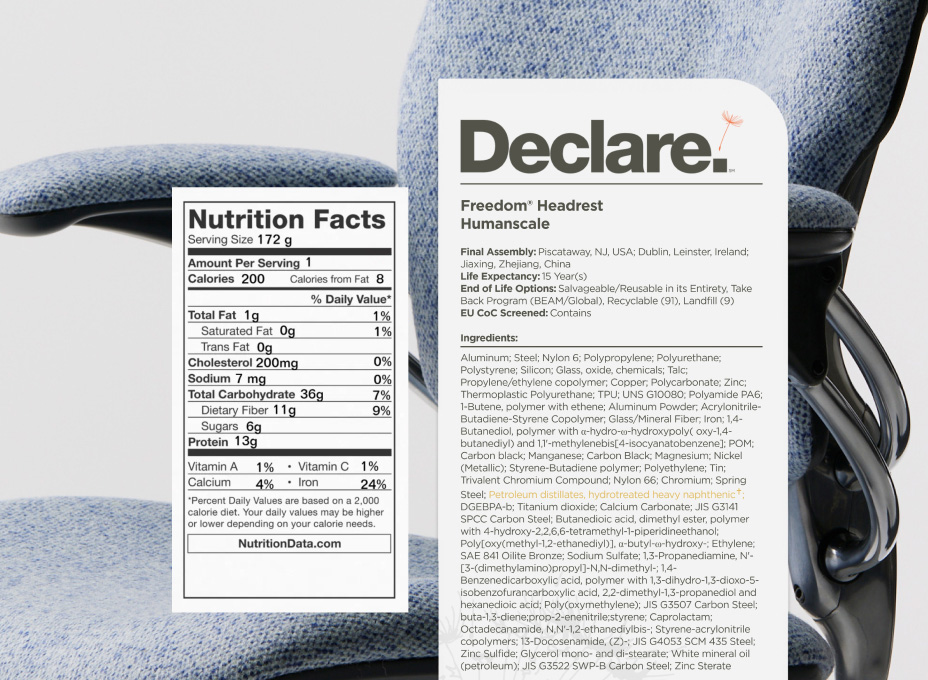
Organisations such as Living Future have helped define this broader vision through programmes including the Living Building Challenge, Living Product Challenge and Declare labels. These frameworks encourage manufacturers to look far beyond conventional environmental reporting by asking deeper questions.
Transparency Is Becoming One of the Most Powerful Design Tools
One of the strongest themes emerging from the discussion was that meaningful progress depends upon transparency. Architects cannot specify healthier materials if they cannot understand what products contain, interior designers cannot prioritise human health if chemical ingredients remain hidden and manufacturers cannot improve products without measuring and disclosing their impacts.
Laura Hamilton-O'Hara challenged the audience to think about transparency not as an end goal, but as the foundation upon which better design decisions are made.
"This is why transparency is really important to us. It is so important to know what goes into things because from there you can make all kinds of other decisions."
Those "other decisions" extend far beyond avoiding chemicals of concern. They influence whether materials can be safely recycled, whether they support circular design principles, how they affect indoor air quality, whether they contribute to biodiversity goals and ultimately whether they align with the regenerative ambitions of a project.
Hamilton-O'Hara was also careful to acknowledge that transparency alone will not solve every challenge facing the built environment. However, it remains one of the industry's most effective catalysts for progress.
"Transparency is not going to fix everything, but it is on average doing something about issues."
That distinction is important. Transparency is not a certification in itself, nor is it a guarantee that every material is perfect. Rather, it creates accountability. Once ingredients are disclosed, manufacturers can begin removing harmful substances, designers can compare products with confidence, and clients can make informed choices based on credible, independently verified information rather than broad environmental claims.
This is why initiatives such as Declare, Health Product Declarations (HPDs), Environmental Product Declarations (EPDs) and the Living Product Challenge have become increasingly influential. They shift the conversation away from marketing language and towards measurable, evidence-based decision making, helping the entire industry move steadily towards healthier, more regenerative outcomes.
From Transparency to Transformation
This philosophy aligns closely with Humanscale’s long-standing approach to product development. By pursuing rigorous third-party certifications including the Living Product Challenge, Declare, Health Product Declarations, LEVEL, FSC® and B Corp Certification, Humanscale believes transparency is more than a reporting exercise—it is an essential design tool that enables continuous improvement.
Understanding what goes into every product allows better decisions to be made about material health, durability, circularity and environmental impact throughout the entire product lifecycle. As Laura Hamilton-O'Hara's presentation reinforced, transparency may not solve every challenge overnight, but it provides the knowledge needed to continually make better choices.
Building a Regenerative Future Together - Every Specification Decision Shapes the Future

One of the most optimistic messages from the event was that meaningful change does not depend upon one revolutionary innovation. It depends upon thousands of better decisions.
Designers increasingly have access to more information than ever before. The challenge is no longer simply finding sustainable products; it is understanding which products genuinely support healthier people and healthier ecosystems. Because the future of design will not be defined simply by the buildings we create. It will be defined by the materials we choose, the questions we ask, and the legacy those choices leave for generations to come.